Lately, I've noticed that many of the writers I love have also been translators, carrying the voices of the authors they love into their own language. Marguerite Yourcenar translated Virginia Woolf's The Waves into French. Mario Vargas Llosa translated Arthur Rimbaud into Spanish. Mathias Énard translated Yussef Bazzi from Arabic, and Haruki Murakami has brought Raymond Carver, F. Scott Fitzgerald, Truman Capote, and Raymond Chandler into Japanese. It always makes me wonder: what does a writer learn by slipping into another writer's voice, and how much of it finds its way into their own books?
This fall, while debates about AI fill the headlines, the spotlight has turned to something no machine can imitate: the talent of literary translators, who are finally being recognized as creative voices in their own right.
 Anne Carson receiving the phone call from the Nobel Prize committee. Photo © Robert Currie
Last week, the Nobel Prize in Literature went to Anne Carson, who moves freely between translations of Greek and Latin classics and her own poetic invention. In her hands, ancient texts feel startlingly alive, as if Sappho and Euripides were speaking to us today, and they become the starting point for her own new writing.
Meanwhile, Emily Wilson's translation of the Odyssey has sold more than a million copies in the United States. Its success shows how much a translator's voice matters: choices of rhythm, vocabulary, and tone can invite a whole new generation into a story nearly three thousand years old.
Translators haven't always been treated as artists, though.
When The Second Sex first appeared in English in 1953, its translator, a zoologist named Howard Parshley, cut a significant portion of Simone de Beauvoir's text and blurred much of its philosophical vocabulary. English-speaking readers had to wait until 2009, when Constance Borde and Sheila Malovany-Chevallier published a complete translation, to read the book Beauvoir actually wrote.
Sometimes a single word changes everything. For decades, Camus's The Stranger opened with "Mother died today." Then, in 1988, Matthew Ward kept the French "Maman," restoring the intimacy, and the strangeness, of Meursault's voice.
Today, the picture is very different. For nearly two decades, French has been the language most often translated into English in the United States,* and its translators are finally getting their due. Since 2018, the National Book Awards have honored translated literature with a category of its own, recognizing translators alongside the authors they bring into English. Aneesa Abbas Higgins won with her translation of Elisa Shua Dusapin's Winter in Sokcho, and Sam Taylor was a finalist for David Diop's Beyond the Door of No Return. This year, Lara Vergnaud is a finalist for Mohamed Mbougar Sarr's Pure Men, and Jeffrey Zuckerman made the longlist with Eden at Dawn by Karim Kattan, whom we will welcome at the French Library next spring.
 Photo © Vincent Alban for The New York Times
Independent presses have been essential to this shift. New Directions, which publishes Anne Carson, has now had two Nobel laureates in a row, and fourteen in its ninety years, as The New York Times recently celebrated. Europa Editions publishes two of our fall guests, Gaëlle Bélem and Camille de Peretti, and Two Lines Press, home to Anne Pauly, belongs to San Francisco's Center for the Art of Translation, which will open a literary center devoted to translation in 2027.
Translation at the French Library this fall
Championing the translators who bring French and Francophone literature to English-speaking readers has long been at the heart of our mission. This fall, that commitment has fresh momentum.
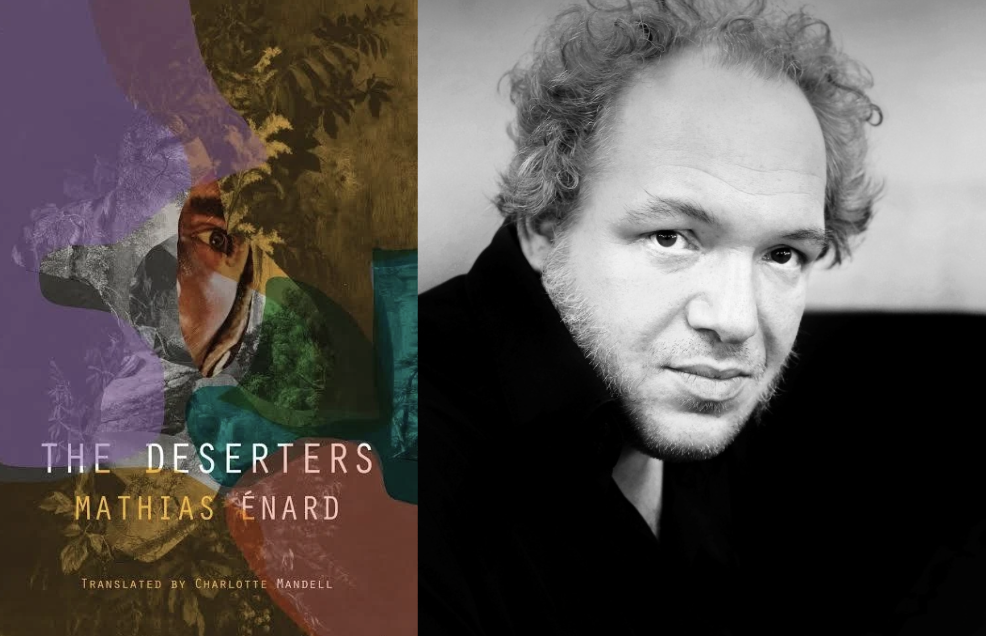
We have opened a new English-language section of books translated from French, and our author talks feature the best of contemporary French writing and translation. Mathias Énard, whose The Deserters, translated by Charlotte Mandell, won the 2026 French-American Foundation Translation Prize, joins Benoit Landon for a conversation at the Boston Book Festival this Saturday, alongside our panel with Emma Ramadan and Sam Taylor, two of the most acclaimed translators working today. In January, our translation workshops with Stéphanie Ravillon return.
It feels like the perfect moment to share a few books worth discovering, and to give their translators the recognition they deserve.
What to read next
If you missed our recent author conversations, here are a few books to look for in our translated section, or at your local bookstore:
- Marie NDiaye, The Witch, translated by Jordan Stump, shortlisted for the 2026 International Booker Prize.
- Violaine Huisman, The Monuments of Paris, which she translated and adapted into English herself.
- Elisa Shua Dusapin, The Old Fire, translated by Aneesa Abbas Higgins. You can meet Dusapin at the French Library on November 16.
- Leïla Slimani, I'll Take the Fire, translated by Sam Taylor, who joins us this Saturday to talk about his craft.
- Maud Ventura, My Husband, translated by Emma Ramadan. A delicious proof that wit, one of the hardest things to translate, can cross languages intact.
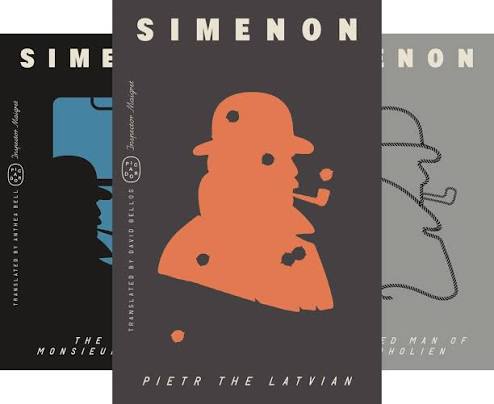
- Georges Simenon's Maigret novels, brought into English by legendary translators such as Linda Asher, Anthea Bell, Linda Coverdale and David Bellos. A good translation is a wonderful way to discover, or rediscover, his world.
Whether you join our panel, borrow a book, or try translating a few lines yourself, I hope this season inspires you to look for the name beside the author's: another creative voice, helping the story reach you.
I hope to see you this Saturday!
Sophie
*Based on the University of Rochester's Translation Database, which tracks translations of fiction, poetry and nonfiction published in the United States since 2008.