You've probably seen someone on social media sharing how they learned six languages in one month using AI. (I might be exaggerating a little, but chances are someone actually did make a video like that at some point.) And instead of feeling motivated to do the same, you end up feeling like a failure. You have the tool, you have access to AI just like that person does, so how come you haven't mastered a language yet?
I'm here to tell you: those miracle formulas aren't real, for that person or for anyone else. It takes time to master something, whatever that something is. And I think we should approach learning as something fun, something we're curious about, like a hobby, and not just one more box to check so we can keep up with someone on the internet.
So from my own experience learning French, here's where I think AI genuinely helps, and where you're better off with a real teacher (and real people) by your side.
This is exactly where I think AI shines. It's a great way for someone curious about French to get in touch with the language and figure out how far they actually want to go without too much commitment. It's a low-stakes way to build a little confidence and decide if this is an investment you actually want to make.
Here's the thing, though: sometimes the questions come at the wrong time. I might not have anything to ask during class because I need more time to process what was just taught. Then the question shows up later, while I'm doing homework, and my teacher isn't there to answer it right away. So, I turn to AI to help me understand it in the moment. Then, in the next class, I bring it back to my teacher, both to confirm I understood it correctly and to double-check that AI actually gave me a reliable answer.
And spoken French is alive: accents shift by region, by generation, by who's speaking and where they grew up. Daily spoken French leans heavily informal, full of slang and expressions you'll never find in a textbook. This is part of why I struggled watching Plan Cœur, a French show about a group of young people with their own particular way of talking.
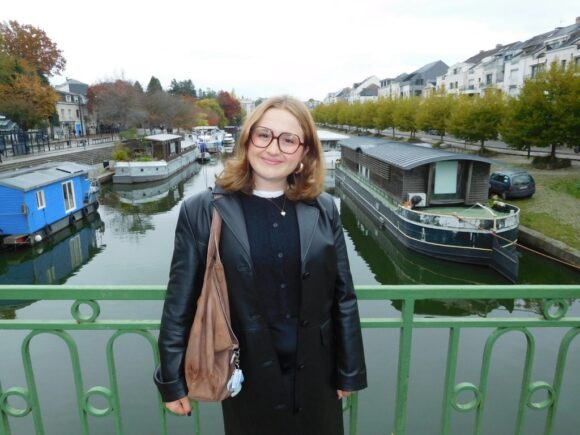
I first really felt the regional gap when I lived in Annecy, where people would gently tease the French spoken "à la campagne" (out in the countryside), a reminder that even native speakers navigate a huge range of French, not just one "correct" version.
Isn't it kind of amazing to realize you're not alone in making a mistake, that your classmate made the exact same one, and suddenly everyone's laughing together? And the best part is your teacher is right there to share that moment with you, and to explain, patiently, how extremely different the pronunciation between “chevaux” and “cheveux” is.
Just having the tool in hand doesn't mean you'll actually use it. Case in point: the drum set sitting behind me as I write this. My husband gifted it to me while I was taking lessons. Then my teacher moved out of town, I never found another one, and I haven't touched it since.
This is actually part of why our classes come in more than one shape. Some people want the regular 10-week track, twice a week — a real routine to build around. Others do better with the slow-paced track, once a week, so it doesn't feel like one more thing crowding the calendar. And if you're the type who wants to just rip the band aid off, there's our intensive program: 15 hours of French in a single week.
And then there's everything around the classroom: Conversation Club for casual, low-pressure practice, wine tastings and cooking classes, art openings, author talks. If one-on-one is more your speed, private lessons let you build a class around exactly what you need, whether that's conversation, exam prep, or French for a very specific reason (moving abroad, a job, a trip). None of it can be replicated by a chat window.
I'm here to tell you: those miracle formulas aren't real, for that person or for anyone else. It takes time to master something, whatever that something is. And I think we should approach learning as something fun, something we're curious about, like a hobby, and not just one more box to check so we can keep up with someone on the internet.
So from my own experience learning French, here's where I think AI genuinely helps, and where you're better off with a real teacher (and real people) by your side.
AI as a "Dip in the Water" Tool
I'm a person with many, many, many interests. I'm curious about nutrition and how it works in our body. I'm passionate about watercolor, even though I'm not very good at it. I often hyperfocus on a topic, and once I've absorbed everything I wanted to know, I move on to the next one without looking back.This is exactly where I think AI shines. It's a great way for someone curious about French to get in touch with the language and figure out how far they actually want to go without too much commitment. It's a low-stakes way to build a little confidence and decide if this is an investment you actually want to make.
AI as a "Homework Colleague"
I've had language teachers in the past tell me to avoid comparing grammar structures with my own language, because sometimes the equivalent structure just doesn't exist. I get why they say that, but honestly, I can't follow that advice. I need to compare. It gives me something visual, a way to say "okay, I already mastered this in language A, so this is my ruler for language B."Here's the thing, though: sometimes the questions come at the wrong time. I might not have anything to ask during class because I need more time to process what was just taught. Then the question shows up later, while I'm doing homework, and my teacher isn't there to answer it right away. So, I turn to AI to help me understand it in the moment. Then, in the next class, I bring it back to my teacher, both to confirm I understood it correctly and to double-check that AI actually gave me a reliable answer.
The Formal-vs-Daily-French Gap
Of all the languages I've studied, I've never encountered one with such a gap between how you learn it from a book (or hear it from an AI voice) and how it's actually used in daily life. You master a sentence in writing, you hear an AI pronounce it perfectly — and then you're standing in a boulangerie in France, someone asks you a question, and you completely blank. It feels like failure, but it isn't. It's just a really normal part of learning a living language.And spoken French is alive: accents shift by region, by generation, by who's speaking and where they grew up. Daily spoken French leans heavily informal, full of slang and expressions you'll never find in a textbook. This is part of why I struggled watching Plan Cœur, a French show about a group of young people with their own particular way of talking.
I first really felt the regional gap when I lived in Annecy, where people would gently tease the French spoken "à la campagne" (out in the countryside), a reminder that even native speakers navigate a huge range of French, not just one "correct" version.
Screen Fatigue and the Pull Toward In-Person Community
Have you ever found yourself going back and forth with an AI chat, hunting for the "best" answer, and ending up frustrated — or worse, completely drained? I've been there more than once, to the point where I've literally had to go outside and walk barefoot on grass just to feel like a human being again. That doesn't happen to me when I'm actually around people. I might walk in unmotivated, but once I'm with others, something shifts — I feel recharged, even though I'm mostly an introvert.What's Lost Emotionally and Culturally in AI/digital Interaction
AI can't tell you how it learned French. It can't tell you about growing up in a small town in France, what its school routine looked like, the specific way its grandmother scolded it in dialect. There's a quiet kind of learning power in storytelling that only comes from a real, genuine conversation. You hear the tone, you catch the excitement or the frustration in someone's voice. Everyone's story is different, and that's exactly where human exchange becomes so powerful.Isn't it kind of amazing to realize you're not alone in making a mistake, that your classmate made the exact same one, and suddenly everyone's laughing together? And the best part is your teacher is right there to share that moment with you, and to explain, patiently, how extremely different the pronunciation between “chevaux” and “cheveux” is.
Accountability: Teacher-led vs. Self-directed Learning
I'm great at being accountable to other people. Ask me to do something, and there's a 99% chance it gets done. Left to my own devices, though? I know it'll fall off fast. I need a day and a time, a place I've committed to being.Just having the tool in hand doesn't mean you'll actually use it. Case in point: the drum set sitting behind me as I write this. My husband gifted it to me while I was taking lessons. Then my teacher moved out of town, I never found another one, and I haven't touched it since.
This is actually part of why our classes come in more than one shape. Some people want the regular 10-week track, twice a week — a real routine to build around. Others do better with the slow-paced track, once a week, so it doesn't feel like one more thing crowding the calendar. And if you're the type who wants to just rip the band aid off, there's our intensive program: 15 hours of French in a single week.
What That Actually Looks Like at the French Library
If you're picturing rows of desks and a grammar drill, that's not really it. Yes, there are the standard language courses, kept small on purpose (max 12 in person, 10 online) so you're actually practicing the language in a friendly environment taught by a native French-speaking teachers. But there are also theme courses that let you use French as a tool to explore something you're already curious about. You end up practicing the language because you're chasing the story, not because it's homework.And then there's everything around the classroom: Conversation Club for casual, low-pressure practice, wine tastings and cooking classes, art openings, author talks. If one-on-one is more your speed, private lessons let you build a class around exactly what you need, whether that's conversation, exam prep, or French for a very specific reason (moving abroad, a job, a trip). None of it can be replicated by a chat window.

Bruna Franco
Marketing & Membership Manager
Bruna first joined the Center as a member, looking for an opportunity to practice French and to be around French culture. She is now thrilled to be the Membership Manager and to provide members with the amazing experience she was previously able to enjoy herself. She is a native Portuguese speaker who, by the age of eight, knew she wanted to be multilingual someday. Working at the French Library now seems like a dream come true.
Contact