Growing up in France, bandes dessinées or BDs (comic books) were a staple on my bookshelf.
Now, you may already know that bandes dessinées are a huge cultural phenomenon in France and Belgium and are considered the “ninth art”. And you may recognize classics like Tintin and Astérix or critically acclaimed graphic novels like L’Arabe du Futur by Riad Sattouf. But in this blog post, I want to offer a look into the typical BDs you would have found in the kid’s section of a bookstore in the early 2000s - not just as reading recommendations, but as a sort of cultural guide to the series that shaped today’s popular culture.
While these BDs were made for a young audience, any language learner knows that children’s content is a great way to ease into reading in a new language (and is often just as enjoyable as an adult!)
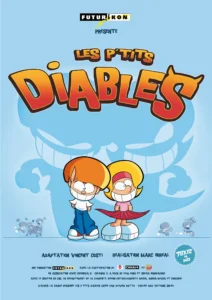 Les P’tits Diables follows the explosive sibling rivalry between Tom and Nina, a brother and sister locked in constant comedic warfare. Built on exaggerated everyday family situations, the series captures the chaos, jealousy, and reluctant affection of childhood. Since its debut in 2000, it has become a fixture of modern French children’s comics, resonating strongly with young readers thanks to its relatable humor and sharp portrayal of family life.
Anybody who butted heads with their siblings (like my older sister and I often did) will appreciate the humor of this hilarious family-centered BD.
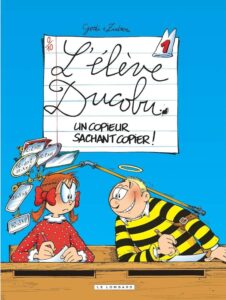 L’Élève Ducobu centers on a chronically lazy but endlessly inventive schoolboy who specializes in cheating schemes to survive in class, constantly clashing with his strict teacher, Monsieur Latouche, and the exemplary Léonie Gratin. Since its launch in 1992, the series has become one of the most recognizable school comedies in Francophone pop culture, spawning animated and live-action adaptations and turning Ducobu into a symbol of mischievous academic underachievement.
Ducobu’s iconic gags, like the dunce cap and 6x7=42, were ingrained so deeply in generations of Francophone youth so as to make this required reading for anyone interested in popular culture.
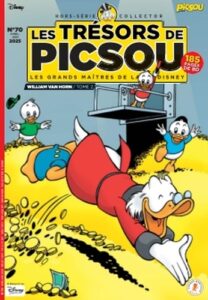 The French incarnation of Scrooge McDuck, originally created by Carl Barks, Picsou is a fabulously wealthy yet adventurous duck whose treasure hunts and globe-trotting exploits continue to capture the attention of young audiences, decades after his introduction. Through both translated American stories and prolific European productions — especially from Italy — the character has become a cornerstone of youth comics culture in France and Belgium.
Fun fact: While calling someone a Picsou is a common way to refer to a miser, the expression picsou or pique-sou did not exist before Picsou was introduced as the French-version of Scrooge McDuck. The French expression that existed before him was grippe-sou.
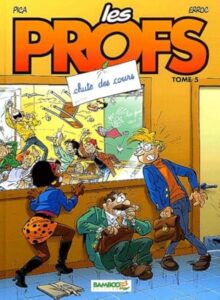 Les Profs humorously portrays a dysfunctional team of secondary school teachers facing equally chaotic students. Each teacher embodies a familiar stereotype — from the overly authoritarian disciplinarian to the burned-out veteran — offering sharp satire of the education system. Since 2000, the series has enjoyed widespread popularity in France and Belgium, leading to successful film adaptations and cementing its place as a major contemporary school-based comedy.
Les Profs still holds a place in my imagination for its humor, and I can only imagine how much funnier it would be to read as an adult or educator.
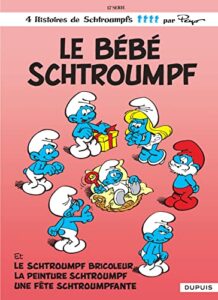 Did you know the Smurfs original name is Les Schtroumpfs? Yes, this iconic world of small blue forest dwellers living in mushroom houses and outwitting the villainous wizard Gargamel is a Belgian original! First appearing in 1958, Les Schtroumpfs grew into one of the most internationally successful Franco-Belgian comics franchises, expanding into animated television, blockbuster films, and global merchandising, and becoming an enduring symbol of Belgian cultural heritage.
As a child, I was absolutely terrified of Gargamel, but as an adult, seeing the look on people’s faces when I tell them that the Smurfs real name is Les Schtroumpfs brings me enough joy to make up for the distress the comics caused me.
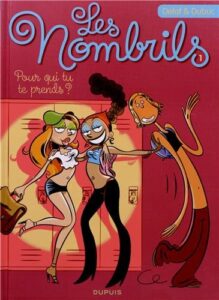 Les Nombrils follows three high school girls: Karine, shy and insecure, and her “best friends” Jenny and Vicky, who are popular, self-centered, and often cruel. The series begins as a comedy about teenage vanity and social status but gradually becomes more dramatic, focusing on betrayal, confidence, and growing up. Launched in 2004 in Québec and published in the Franco-Belgian market, the series became a standout success for its biting social commentary and strong character development, earning a wide readership among teens and young adults while pushing mainstream humor comics toward more dramatic and psychologically nuanced storytelling.
This last recommendation may not have had the same widespread cultural impact as series like Ducobu, but I’ve added it because it is by far the most profound and complex in its storytelling, while remaining funny and easy to read. Think of it as a BD version of coming-of-age comedies like Mean Girls.
Whether you’re looking for reading recs or just trying to up your pop culture literacy, knowing these bandes dessinées will be sure to help familiarize you with French-Belgian humor and cultural references.
If you like bandes dessinées and want more recommendations, check out some of other blog posts here, here, and here!
Now, you may already know that bandes dessinées are a huge cultural phenomenon in France and Belgium and are considered the “ninth art”. And you may recognize classics like Tintin and Astérix or critically acclaimed graphic novels like L’Arabe du Futur by Riad Sattouf. But in this blog post, I want to offer a look into the typical BDs you would have found in the kid’s section of a bookstore in the early 2000s - not just as reading recommendations, but as a sort of cultural guide to the series that shaped today’s popular culture.
While these BDs were made for a young audience, any language learner knows that children’s content is a great way to ease into reading in a new language (and is often just as enjoyable as an adult!)
1. Les P’tits Diables
Les P’tits Diables follows the explosive sibling rivalry between Tom and Nina, a brother and sister locked in constant comedic warfare. Built on exaggerated everyday family situations, the series captures the chaos, jealousy, and reluctant affection of childhood. Since its debut in 2000, it has become a fixture of modern French children’s comics, resonating strongly with young readers thanks to its relatable humor and sharp portrayal of family life.
Anybody who butted heads with their siblings (like my older sister and I often did) will appreciate the humor of this hilarious family-centered BD.
2. L’Élève Ducobu
L’Élève Ducobu centers on a chronically lazy but endlessly inventive schoolboy who specializes in cheating schemes to survive in class, constantly clashing with his strict teacher, Monsieur Latouche, and the exemplary Léonie Gratin. Since its launch in 1992, the series has become one of the most recognizable school comedies in Francophone pop culture, spawning animated and live-action adaptations and turning Ducobu into a symbol of mischievous academic underachievement.
Ducobu’s iconic gags, like the dunce cap and 6x7=42, were ingrained so deeply in generations of Francophone youth so as to make this required reading for anyone interested in popular culture.
3. Picsou
The French incarnation of Scrooge McDuck, originally created by Carl Barks, Picsou is a fabulously wealthy yet adventurous duck whose treasure hunts and globe-trotting exploits continue to capture the attention of young audiences, decades after his introduction. Through both translated American stories and prolific European productions — especially from Italy — the character has become a cornerstone of youth comics culture in France and Belgium.
Fun fact: While calling someone a Picsou is a common way to refer to a miser, the expression picsou or pique-sou did not exist before Picsou was introduced as the French-version of Scrooge McDuck. The French expression that existed before him was grippe-sou.
4. Les Profs
Les Profs humorously portrays a dysfunctional team of secondary school teachers facing equally chaotic students. Each teacher embodies a familiar stereotype — from the overly authoritarian disciplinarian to the burned-out veteran — offering sharp satire of the education system. Since 2000, the series has enjoyed widespread popularity in France and Belgium, leading to successful film adaptations and cementing its place as a major contemporary school-based comedy.
Les Profs still holds a place in my imagination for its humor, and I can only imagine how much funnier it would be to read as an adult or educator.
5. Les Schtroumpfs (The Smurfs)
Did you know the Smurfs original name is Les Schtroumpfs? Yes, this iconic world of small blue forest dwellers living in mushroom houses and outwitting the villainous wizard Gargamel is a Belgian original! First appearing in 1958, Les Schtroumpfs grew into one of the most internationally successful Franco-Belgian comics franchises, expanding into animated television, blockbuster films, and global merchandising, and becoming an enduring symbol of Belgian cultural heritage.
As a child, I was absolutely terrified of Gargamel, but as an adult, seeing the look on people’s faces when I tell them that the Smurfs real name is Les Schtroumpfs brings me enough joy to make up for the distress the comics caused me.
6. Les Nombrils
Les Nombrils follows three high school girls: Karine, shy and insecure, and her “best friends” Jenny and Vicky, who are popular, self-centered, and often cruel. The series begins as a comedy about teenage vanity and social status but gradually becomes more dramatic, focusing on betrayal, confidence, and growing up. Launched in 2004 in Québec and published in the Franco-Belgian market, the series became a standout success for its biting social commentary and strong character development, earning a wide readership among teens and young adults while pushing mainstream humor comics toward more dramatic and psychologically nuanced storytelling.
This last recommendation may not have had the same widespread cultural impact as series like Ducobu, but I’ve added it because it is by far the most profound and complex in its storytelling, while remaining funny and easy to read. Think of it as a BD version of coming-of-age comedies like Mean Girls.
Whether you’re looking for reading recs or just trying to up your pop culture literacy, knowing these bandes dessinées will be sure to help familiarize you with French-Belgian humor and cultural references.
If you like bandes dessinées and want more recommendations, check out some of other blog posts here, here, and here!

Emily Ternynck
Administrative Assistant & Social Media Coordinator