At seventeen, I embarked on a whirlwind trip to Europe with my German teacher and a group from my high school, convinced it might be my only opportunity to travel overseas. London, Munich, and Rome were undeniably beautiful, but when we arrived in Paris, I felt an indescribable kind of electric shock mixed with a calm sense of fate, something I would later learn was called a coup de foudre (though I didn’t know how to say it yet). Since then, I’ve come to understand the importance of such encounters, whether with a city, a person, or a work of art. When lightning strikes, it has the power to change the trajectory of a life.
I experienced the same feeling when I discovered the French New Wave, accompanying Jean Seberg and Jean-Paul Belmondo down the Champs-Élysées, with their magnetic allure. Like so many jeunes Américaines in love with Paris through the generations, I identified with Seberg’s character as she searched for her identity (and also struggled with French slang!) in a city full of possibility. À bout de souffle (1960) opened my eyes to a new kind of cinema that seemed surprisingly modern, combining depth and playfulness. It had a different kind of energy that I later understood was fueled by Godard’s passion for authenticity and the artistic freedom he shared with the cast and crew. Similarly, I was struck by the opening scenes of Vivre sa vie (1962), which introduced Anna Karina’s character through an unconventional shot of the back of her head. When she turned around, Karina’s vitality and emotional depth captivated me, and she soon became one of my favorite actresses. Agnès Varda inspired me with Cléo de 5 à 7 (1962), which featured a female protagonist wandering the streets of Paris in search of her true, more authentic identity. Only later did I realize that these heroines, with their gravitas and spontaneity, were revealing new ways of being to me while modeling individuality and independence through their own search for themselves.
At twenty, the longing that followed my initial coup de foudre pulled me back to Paris, where I studied French literature by day at the Sorbonne, obligatoirement, then squeezed in as many films as possible at night, between the Cinémathèque on the Rive Droite and the iconic salles indépendantes of the Rive Gauche. Like the heroines of the French New Wave, Paris offered itself to me as a playground for self-discovery. Propelled by fascination, like in any love story, I was drawn to learn the nuances of the language and explore every facet of French culture, especially cinema.
Every May, I looked forward to the Cannes Film Festival, where I discovered new films from all over the world. Before I knew it, what I once imagined would be a brief European fortnight turned into a seventeen-year chapter of my life. As I became more “Parisian,” I also rediscovered my Texas roots and my first love, music. In between classes, I started writing songs and playing in the bistros of the Bastille. In search of a topic for my degree, a decisive encounter with an inspiring film professor led me back to the New Wave at Université Paris Nanterre, where I completed my doctorate in film studies, writing De l’amour, des femmes et de la Nouvelle Vague: reconfigurations culturelles et création d’une modernité filmique française, which later sparked Nouvelles Femmes.
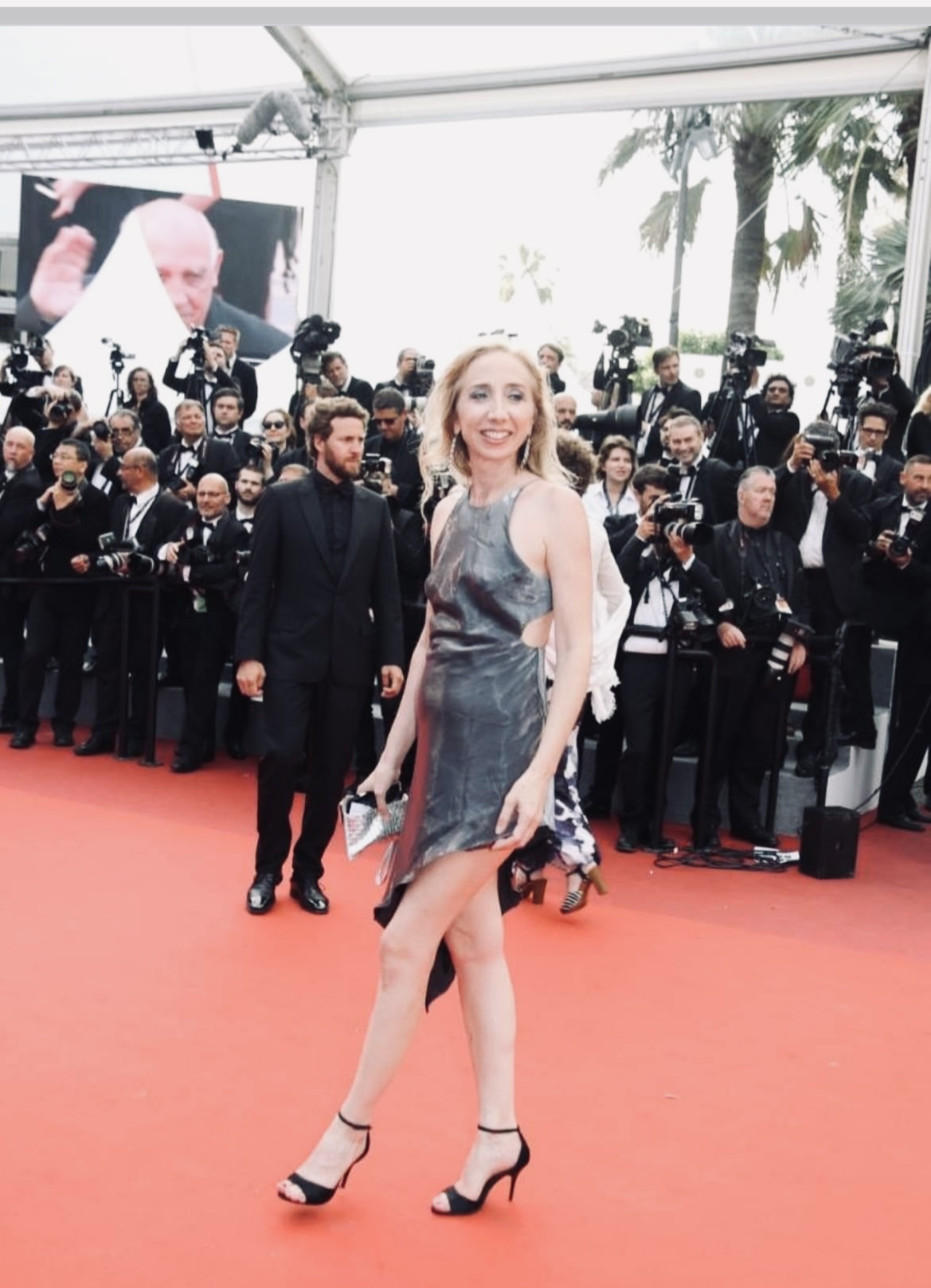 Some encounters, whether artistic, academic, or romantic, create meaning in our lives and a lasting magic, like those behind the scenes of the Nouvelle Vague that changed cinema forever. Off-screen coups de foudre led to on-screen collaborations that would revolutionize French cinema: Godard & Karina, Moreau & Malle, Bardot & Vadim…
In Et Dieu… créa la femme (1956), the coup de foudre between Vadim and Bardot created Juliette, the film’s magnetic epicenter. The very traits that drew the director to the actress off screen define Bardot’s cinematic counterpart through her pursuit of authenticity and freedom in relationships and in her own way of being. At ease with the director (who was also her husband), Bardot seemed to appear uninhibited on screen and without artifice. While giving herself freely to Vadim’s camera (and the male gaze), Bardot maintained a certain agency that led her to become a role model for women as well as a bombshell. This groundbreaking duo inspired the young critics at the Cahiers du Cinéma to create their own films with the women in their lives, inaugurating the New Wave and setting the stage for a cinematic revolution.
Looking back, I see how each coup de foudre, with a city, a film, a mentor, an artistic collaborator, or a love, has redirected my trajectory and made my life meaningful. Like in cinema, certain encounters shape our lives and open us to new ways of seeing, leaving us forever changed.
— Ericka Knudson
The French Library is delighted to present Et Dieu… créa la femme as part of our Ciné Club series on Tuesday, February 24, 2026. We are especially honored to welcome Ericka Knudson for a presentation and post-screening discussion, followed by a book signing, your chance to meet Ericka in person.